
The short answer
Do not mix drain cleaners with other drain products, bleach or household chemicals. Follow the original label. Keep the container and product name so the provider knows what may remain in the line.
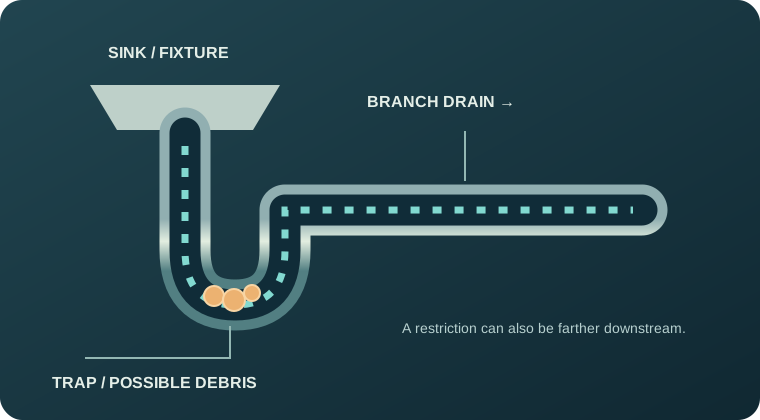
Debris near a trap is one possibility. A clear opening does not rule out a restriction farther downstream. Describe the fixture and any other affected drains.
Simplified educational illustration · not an on-site diagnosisAvoid splash-producing experiments
Do not plunge or dismantle a drain that contains a chemical product unless the label and a qualified professional indicate it is safe. A blocked fixture can retain liquid that splashes during handling.
Describe the failure clearly
Tell the provider when the product was used, how much was used according to your recollection and whether the drain is still holding water. Also report other affected fixtures; chemical failure does not establish a main-line obstruction by itself.
Choose the next task from the symptoms
A stubborn local clog, a foreign object and a sewer backup need different assessment. Request help for the actual symptom rather than seeking a stronger chemical or assuming the pipe must be replaced.
At a glance
| Situation | Next step | Keep in mind |
|---|---|---|
| Unknown product already used | Do not add another cleaner. | Identify the container if possible |
| Standing chemical liquid remains | Avoid contact and splashing. | Tell the provider before work |
| Exposure or illness occurs | Follow label emergency instructions. | Get appropriate urgent assistance |
Related service
Sources & reading notes
General homeowner orientation. This guide does not replace an on-site assessment, product label or city-specific utility instruction.