
The short answer
Let cooking fats cool and dispose of them appropriately in the trash or an accepted collection route. Wipe cookware before washing. Hot water and dish soap do not make grease disposal down a drain a sound prevention plan.
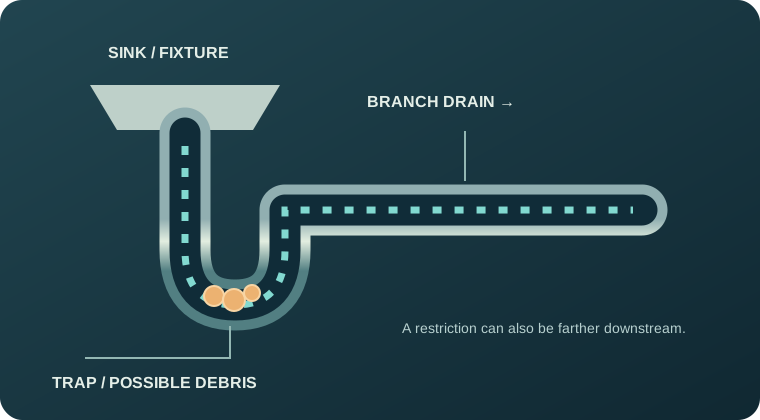
Debris near a trap is one possibility. A clear opening does not rule out a restriction farther downstream. Describe the fixture and any other affected drains.
Simplified educational illustration · not an on-site diagnosisPut wipes in the trash
EPA lists wipes and other unsuitable materials among contributors to sewer problems. A product being labeled flushable does not mean every local sewer system will handle it without trouble.
Use the right prevention for the fixture
A removable hair strainer can catch debris at a shower; keeping food solids out helps a kitchen branch. Do not put coffee grounds, floss or other unsuitable solids into the drain. Follow your local utility’s disposal guidance.
Know prevention’s limits
Good habits do not mend a damaged or poorly functioning line. If backups persist despite appropriate use, arrange an assessment and keep a history of the affected fixtures.
At a glance
| Situation | Next step | Keep in mind |
|---|---|---|
| Cooking grease | Cool and dispose appropriately. | Do not rinse it down |
| Wipes and hygiene products | Put them in the trash. | Follow local utility guidance |
| Hair and food solids | Capture before the drain. | Clean strainers regularly |
Related service
Sources & reading notes
- Mustang: what should not go down the drain
- Edmond fats, oils and grease guidance
- Why sanitary sewers overflow
General homeowner orientation. This guide does not replace an on-site assessment, product label or city-specific utility instruction.