
What to describe when you request help
- One toilet rises instead of draining.
- Both toilets stop draining at the same time.
- Flushing makes another drain bubble or overflow.
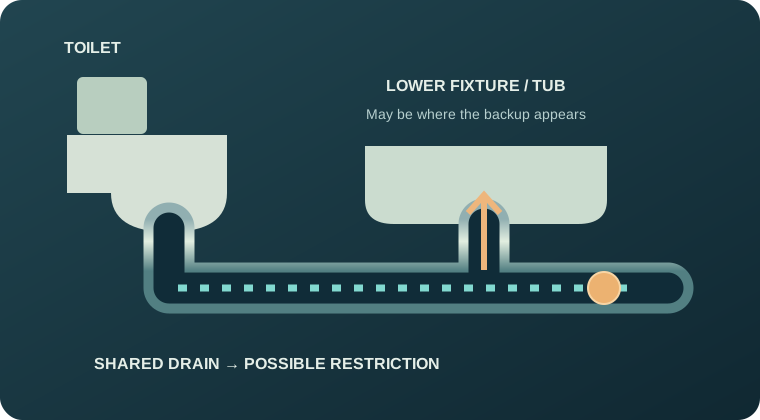
A shared restriction can make a tub or shower back up when a toilet is flushed. Stop adding water to an active backup; describe the full pattern to the provider.
Simplified educational illustration · not an on-site diagnosisStop before the bowl overflows
Do not keep flushing a bowl that is already rising. Keep people away from spilled wastewater. If multiple fixtures are affected, avoid using the connected plumbing until the problem is assessed.
Mention other fixtures immediately
A blocked toilet with a normally draining sink is a different pattern from two toilets and a tub failing together. Tell the provider about every affected fixture and whether the same issue happened before.
Objects and waste need different assessment
If a toy, wipe or other object may have entered the toilet, say so. Do not attempt to force it farther into the system with improvised tools. Removing a toilet or working on the connection may be a separate task from ordinary clearing.
After flow returns
Ask whether the provider found a local obstruction or evidence of a shared-line issue. Keep any findings if the problem is recurring. Restored flow today does not by itself explain why the blockage formed.
One toilet blocked, or both toilets will not flush?
If one bowl will not clear and other drains behave normally, describe a toilet-specific problem. If both toilets fail, a shower fills or a floor drain rises, mention all of them before booking. Do not keep flushing to test the system. Shared-line assessment may be more appropriate than treating each toilet as a separate clog.
Questions before booking
Are flushable wipes safe for my drains?
Products marketed as flushable can still contribute to sewer blockages. Follow local utility guidance and put wipes in the trash.
Does a clogged toilet mean the sewer needs replacement?
No. A local obstruction and damaged sewer line are different findings. Request diagnosis before approving replacement.