
The short answer
Rain entering through a doorway, surface water around the foundation and wastewater returning through a drain are different problems. Describe where the water first appeared and avoid contact with suspected sewage.
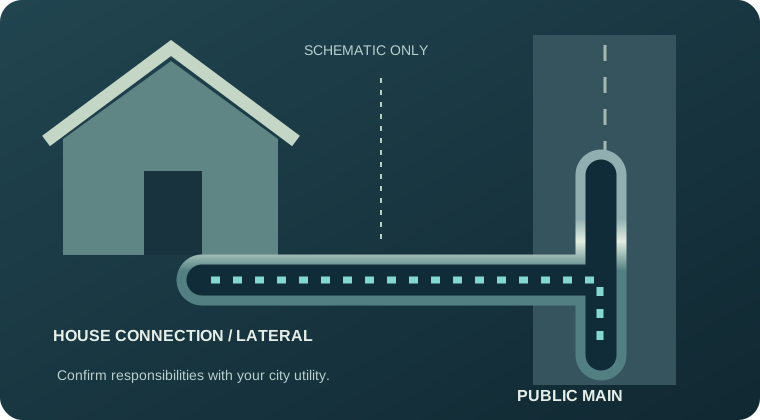
Use the city’s reporting procedure when public sewer trouble may be involved. The drawing does not establish ownership, a property boundary or who must pay for a repair.
Simplified educational illustration · not an on-site diagnosisReport the timing and pattern
Note whether other properties are affected, whether a public manhole is overflowing and whether the drain also blocks in dry weather. Do not enter floodwater or public sewer structures to investigate.
Use local utility guidance
A public sewer concern should be reported through the city’s official route. The utility may assess its system while a private line still needs a separate assessment. Procedures and responsibility vary by location.
Protect people before testing
Avoid using fixtures that feed an active backup. Keep children and pets away, stay clear of electrical hazards and arrange suitable cleanup if contaminated water has entered the building. A line-clearing visit is not automatically a restoration visit.
At a glance
| Situation | Next step | Keep in mind |
|---|---|---|
| Rainwater enters at exterior opening | Possible stormwater or building problem. | Describe source separately |
| Wastewater rises through drains | Possible drainage or sewer problem. | Stop adding water and report |
| Public manhole overflows | Public-system concern. | Keep clear and notify utility |
Related service
Sources & reading notes
General homeowner orientation. This guide does not replace an on-site assessment, product label or city-specific utility instruction.