
The short answer
Do not flush again just to see whether the problem has cleared. Avoid running the connected washer, dishwasher or fixtures while wastewater is returning. Keep people and pets away from contaminated water.
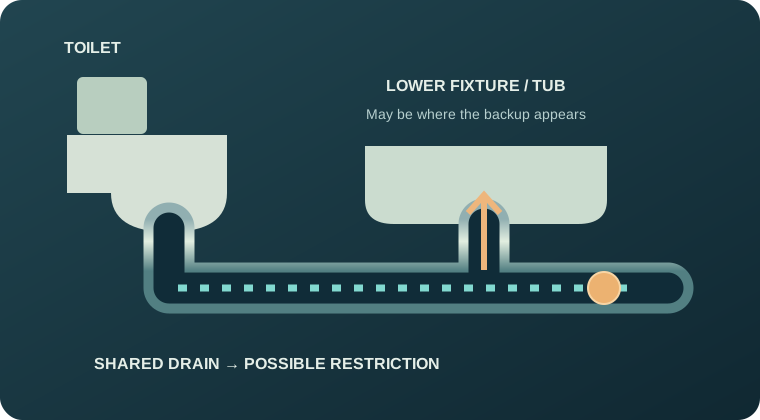
A shared restriction can make a tub or shower back up when a toilet is flushed. Stop adding water to an active backup; describe the full pattern to the provider.
Simplified educational illustration · not an on-site diagnosisConsider the correct reporting route
Ask whether nearby properties are having trouble or whether sewage is appearing outside. A public-main concern belongs with the local utility; a private connection may need a drain provider. City procedures differ.
Separate clearing from cleanup
Restoring drainage does not automatically remove contaminated materials or dry the room. Confirm whether a separate sanitation or restoration service is needed and what the drain visit includes.
At a glance
| Situation | Next step | Keep in mind |
|---|---|---|
| Water rises only after a flush | Avoid another flush. | Describe the connected-fixture pattern |
| Several rooms are affected | Stop household water use where possible. | Request broader line assessment |
| Water reaches electrical equipment | Stay out of the wet area. | Seek immediate help for the hazard |
Related service
Sources & reading notes
General homeowner orientation. This guide does not replace an on-site assessment, product label or city-specific utility instruction.