
The short answer
Ask whether roots were observed and where they were located. A camera report or documented finding is more useful than assuming roots from the presence of mature trees.
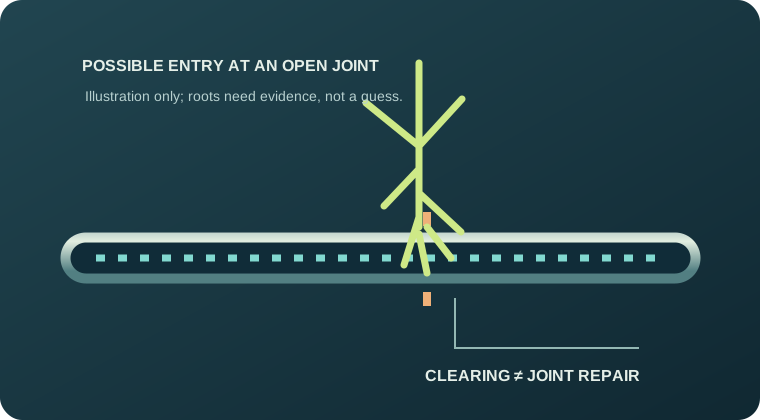
Ask for the recorded location and pipe condition if roots or the same blockage return. The diagram illustrates a possible mechanism, not the condition of your sewer.
Simplified educational illustration · not an on-site diagnosisUnderstand the difference between tasks
Removing roots may reopen the line. It may not close the joint or defect through which they entered. Ask the provider to distinguish immediate clearing from a recommendation about the pipe itself.
Discuss recurrence honestly
There is no universal maintenance interval for every property. Ask what follow-up is justified by the observed line condition, previous recurrence and repair options. Avoid a promise that one cleaning always solves the entry problem permanently.
Keep the evidence
Save recordings, images, location notes and the written scope. If a repair is recommended, ask what section is involved, why and whether alternatives are suitable. Do not put unknown chemicals into the sewer as an improvised fix.
At a glance
| Situation | Next step | Keep in mind |
|---|---|---|
| Roots suspected | Request an evidence-based assessment. | Do not diagnose from landscaping |
| Roots documented | Ask about clearing and entry point. | Cleaning is not sealing |
| Repair recommended | Request location and explanation. | Keep images and scope |
Related service
Sources & reading notes
General homeowner orientation. This guide does not replace an on-site assessment, product label or city-specific utility instruction.