
The short answer
Stop the cycle if it is safe to do so. Do not handle electrical plugs or appliances while standing in water. Keep the room clear and do not start another cycle to reproduce an active overflow.
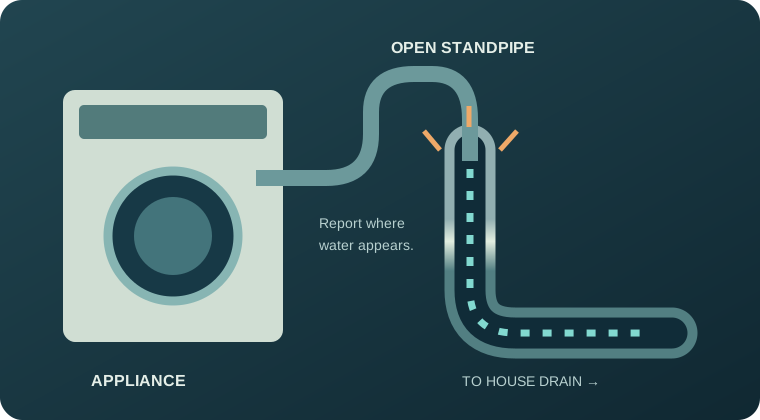
Water spilling from the standpipe is a different service description from a washer that will not pump out. Report the observed location; do not repeat a cycle to reproduce an overflow.
Simplified educational illustration · not an on-site diagnosisName the point of overflow
Was the standpipe overflowing, was the machine leaking underneath, or did a nearby sink or floor drain back up? Explain what you observed rather than booking every event as a washer repair.
Check the wider pattern
Report whether toilets, sinks or tubs also reacted. A restricted laundry branch and a deeper shared-line blockage can require different assessment. The pump-out phase can reveal a restriction without proving its exact position.
Ask what the appointment includes
Drain clearing, appliance repair and water-damage drying are different scopes. Before the visit, confirm the type of help you are arranging, the access needed and who can approve work.
At a glance
| Situation | Next step | Keep in mind |
|---|---|---|
| Standpipe overflows | Drainage assessment may be needed. | Describe pump-out timing |
| Water leaks from machine body | Appliance or connection assessment may be needed. | Describe the source |
| Nearby low drain backs up | A shared restriction may be involved. | Mention all affected fixtures |
Related service
Sources & reading notes
General homeowner orientation. This guide does not replace an on-site assessment, product label or city-specific utility instruction.